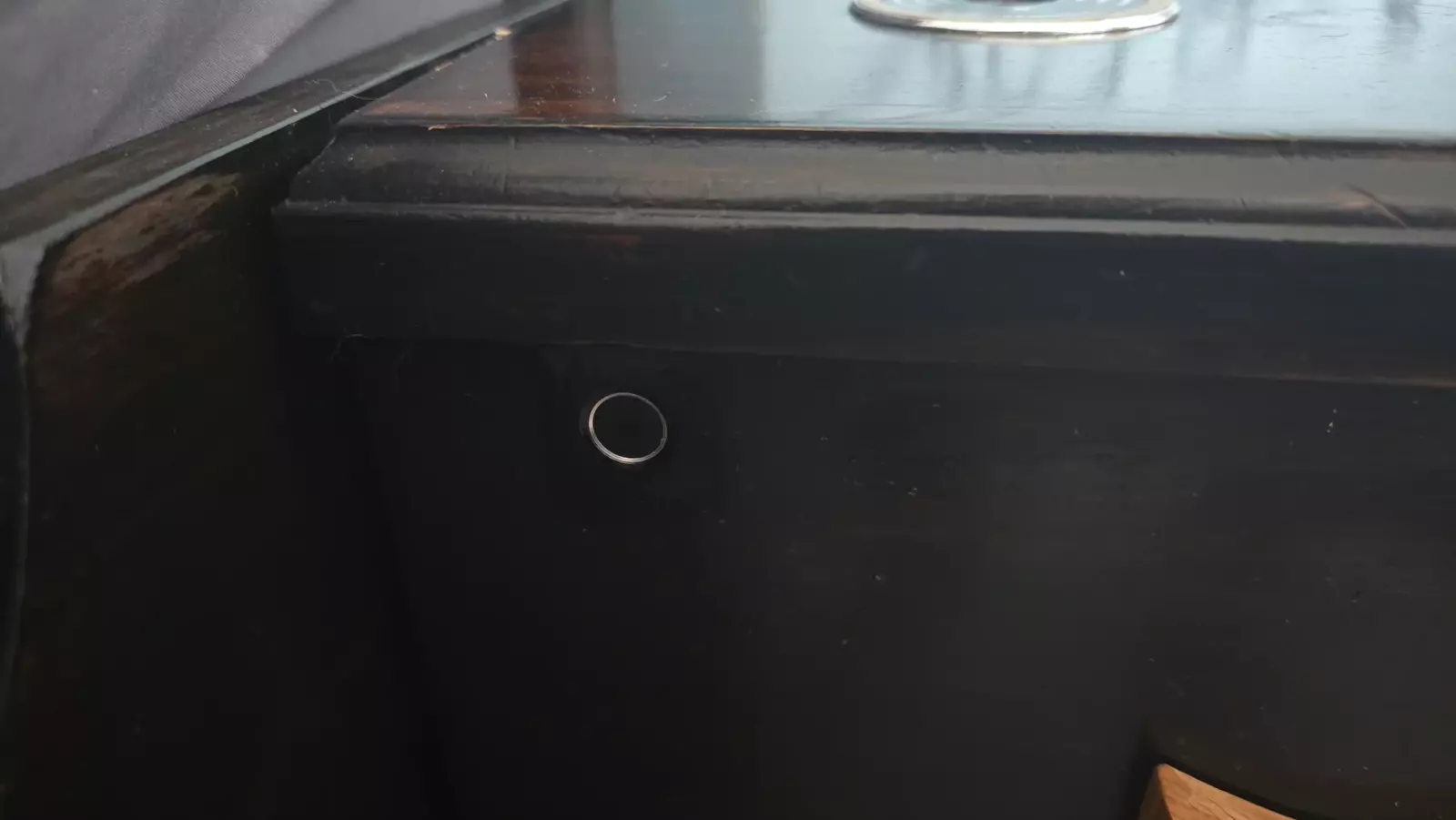
The Lock Is Not the Whole System
They want to know whether a biometric lock is secure, how quickly it opens, and what happens if the scanner does not recognize their fingerprint.
Those are sensible questions. But the lock is only one part of the answer.
A biometric reader can control access to a compartment. It cannot make weak joinery strong, prevent a poorly fitted panel from revealing itself, or compensate for careless placement. Security comes from the complete piece: structure, concealment, hardware, installation, and the way the owner intends to use it.
What Biometrics Do Well
The main advantage is speed.
A properly configured reader does not require a key to be found or a combination to be entered. That matters when the compartment contains medication that needs to remain inaccessible to children, valuables that should not be left in plain sight, or a legally owned firearm the owner may need to reach without searching through a ring of keys.
Biometrics also remove one common problem with keyed locks: the key itself.
A key can be misplaced, copied, or left somewhere predictable. A fingerprint is already with the authorized user. Multiple fingerprints can usually be enrolled, allowing access for the people the owner chooses without creating additional physical keys.
That convenience is valuable. It should not be mistaken for perfection.
What They Cannot Guarantee
A biometric lock can fail to read a fingerprint.
Moisture, dust, a cut finger, an awkward angle, or a poorly enrolled print can interfere with recognition. Some readers are more forgiving than others, but I never design around the assumption that a scanner will work perfectly every time.
Power is another consideration. Batteries eventually need to be replaced. Wiring needs to be protected. The design needs a practical way to handle a depleted battery without turning the furniture into a locked wooden box.
There also needs to be a backup-access plan.
That does not mean placing an obvious keyway beside the fingerprint reader. It means deciding, during the design process, how the owner will regain access if the electronics or power source fails. The right answer depends on the piece, its location, and what it is intended to secure.
Concealment Still Matters
A strong lock mounted behind a panel with an obvious seam is not much of a concealment system.
The compartment should belong to the piece. Grain direction, reveals, molding profiles, drawer spacing, shadows, and normal furniture proportions all help keep the opening from announcing itself.
The mechanism also needs to remain quiet and controlled. A panel that shifts when someone leans against it or hardware that rattles inside a cabinet defeats the purpose, even if the lock itself works exactly as intended.
This is the difference between adding a biometric latch to furniture and designing concealment furniture around a biometric access system.
The Questions I Ask First
Before selecting hardware, I need to know what the compartment is meant to hold, who should have access, how quickly access is needed, and where the finished piece will live.
A bedside table calls for different decisions than a bookcase, display cabinet, or hidden door. A compartment intended for medication has different requirements from one built for documents, jewelry, or a firearm.
I also ask how the owner expects to use the piece every day.
Good security should fit the routine of the person using it. If the process is unnecessarily complicated, people start creating shortcuts. A technically impressive mechanism is not useful if it makes the furniture frustrating to live with.
One Component in a Considered Piece
I use technology where it earns its place.
A biometric lock can provide fast, keyless access and help limit who can open a compartment. It works best when the rest of the piece has been designed with the same care: solid construction, protected hardware, thoughtful backup access, and concealment that does not call attention to itself.
The goal is not to build furniture around a gadget.
The goal is to build a lasting piece that quietly does exactly what its owner needs it to do.
If you have something you've been trying to figure out how to secure — a firearm, a medication, valuables, a room — the design consultation is always free. Bring the problem. We'll figure out the piece.